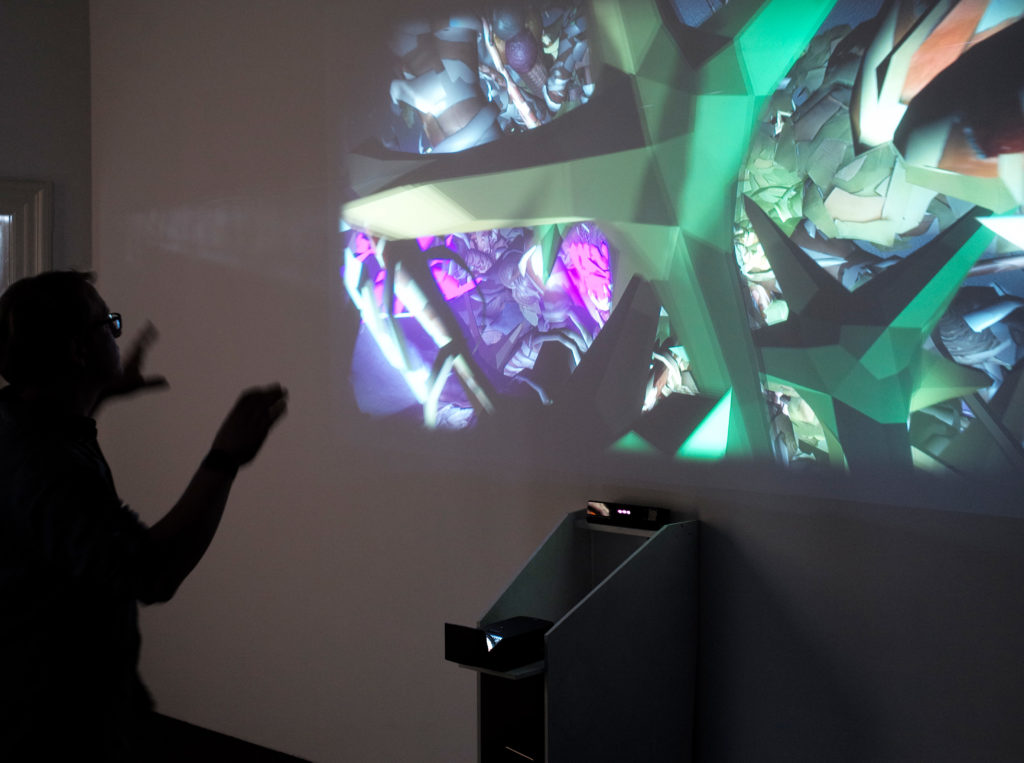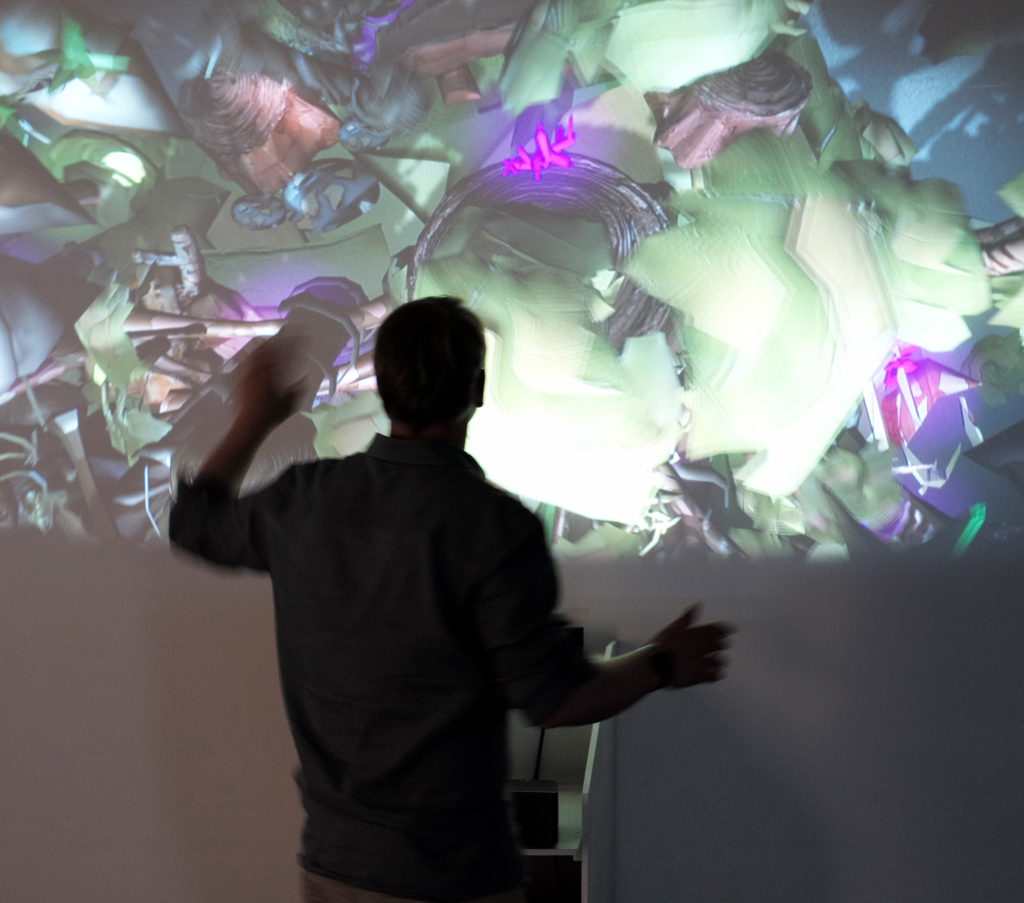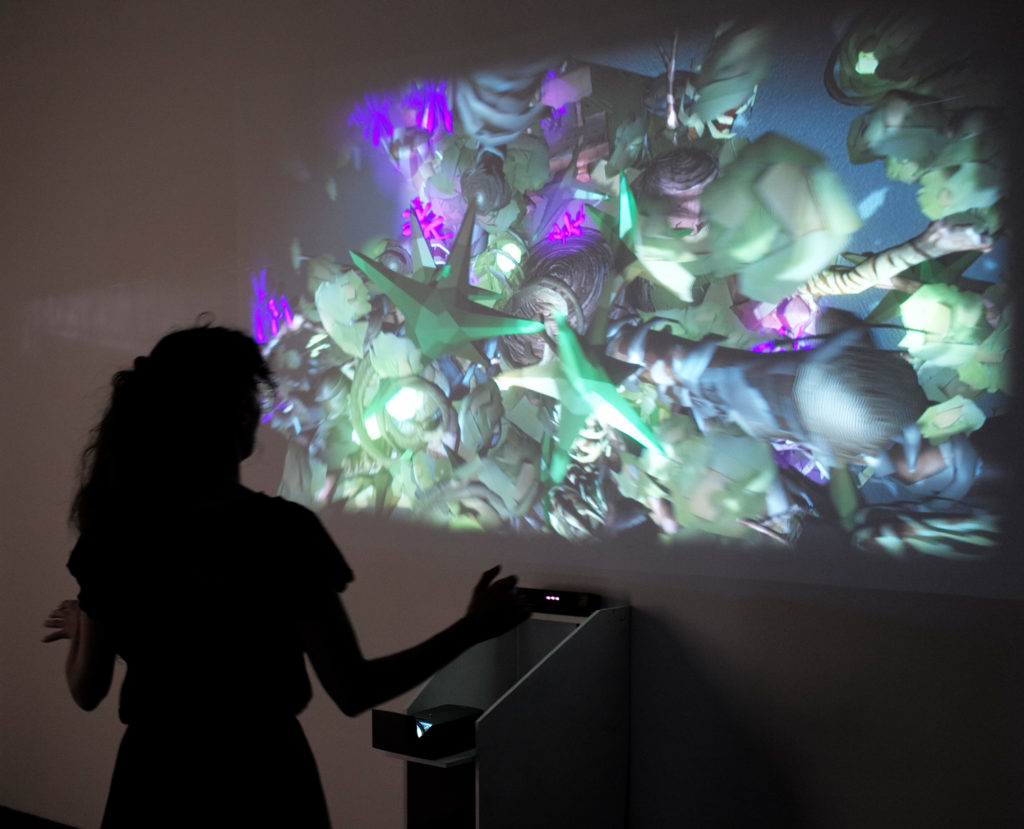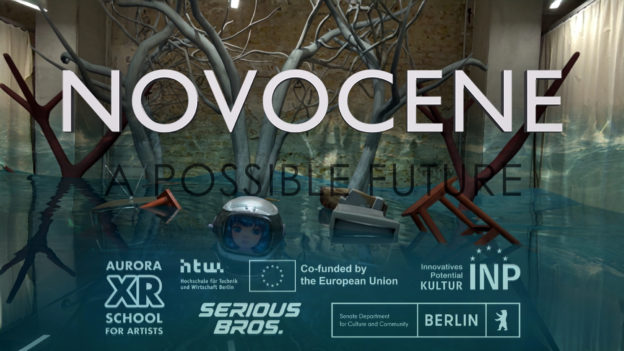
Interactive Mixed Reality Experience | 9 minutes
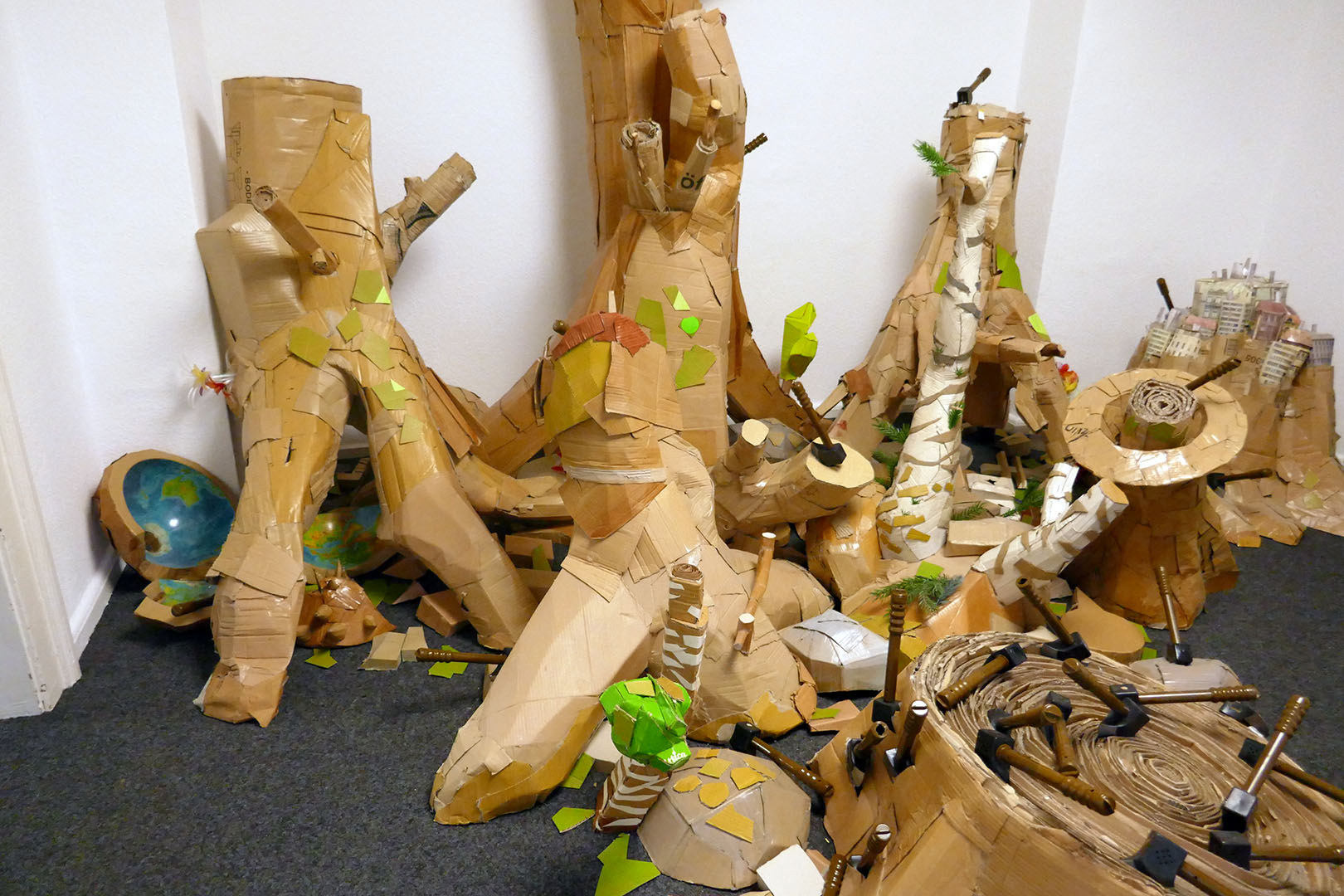
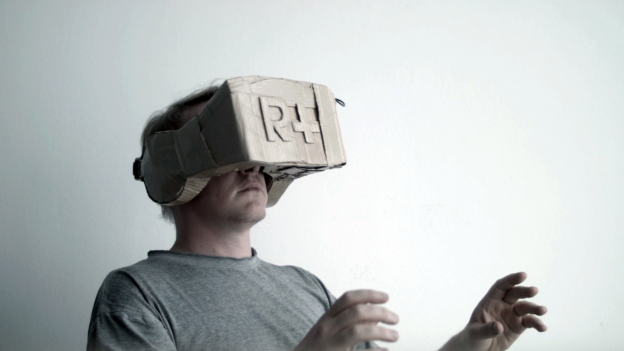
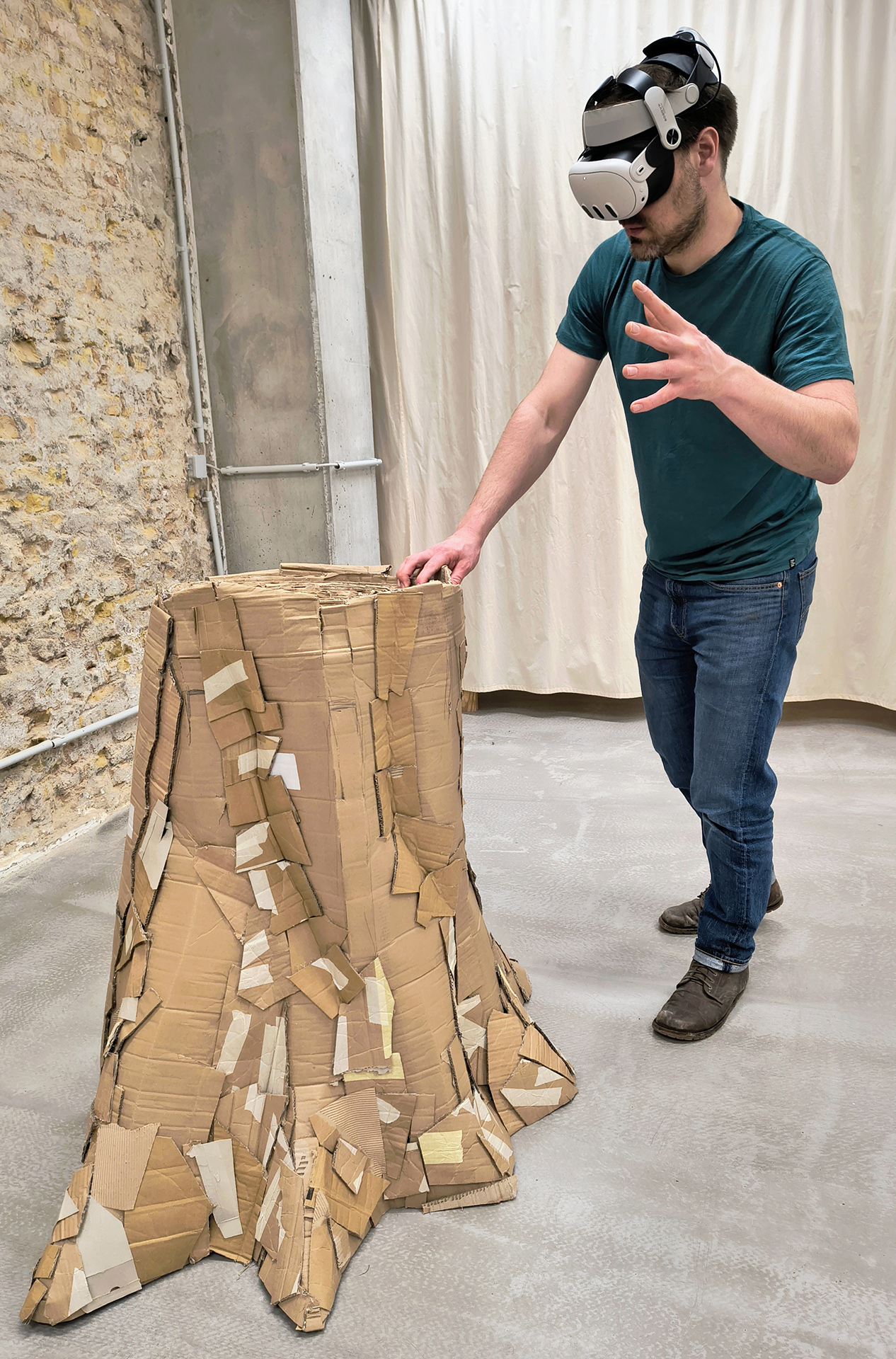
Quest 3 MR headset | analog tree sculpture
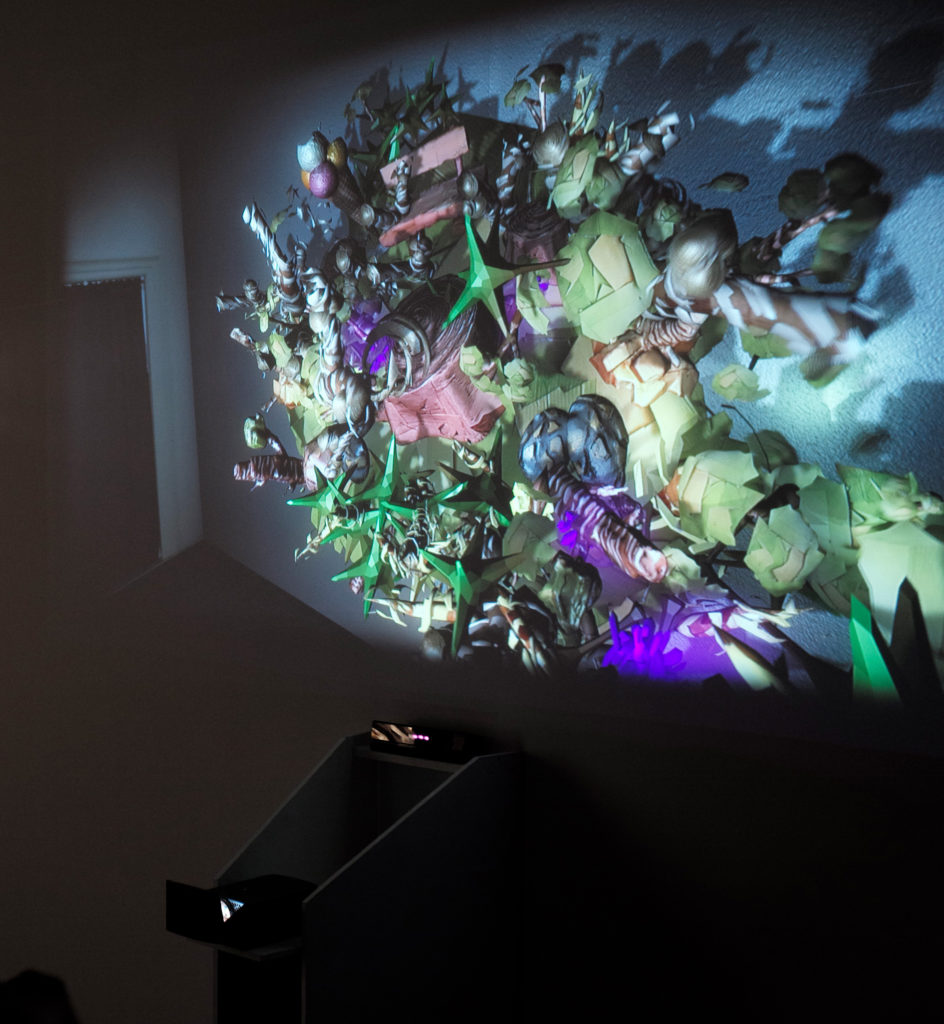
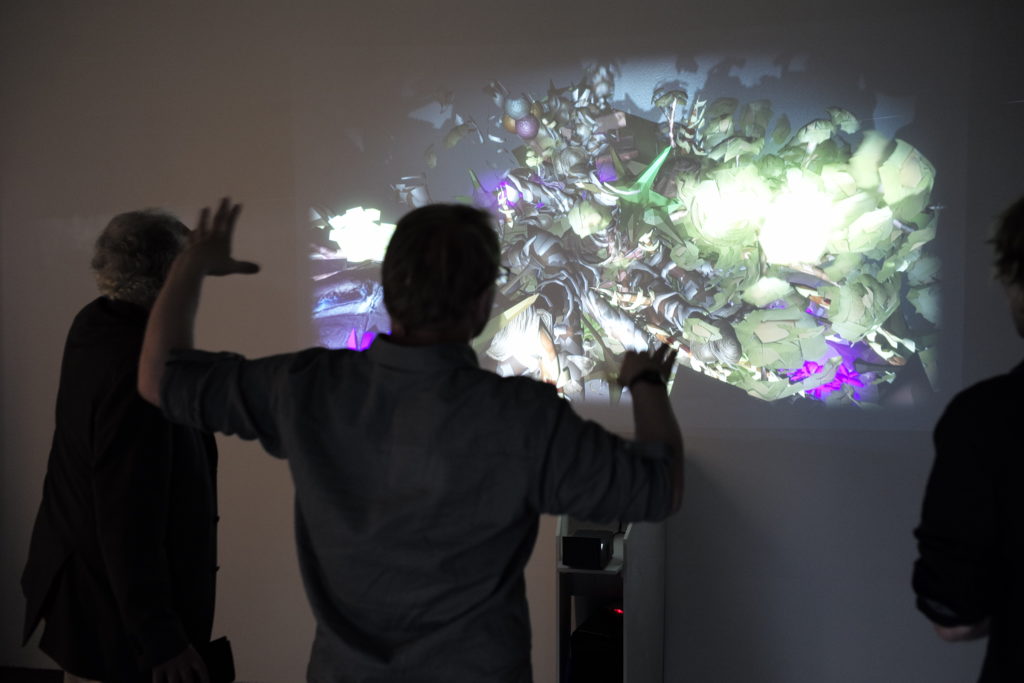
Novocene unfolds an immersive narrative inviting us to join humankind‘s journey through the Anthropocene. A story of growth that leads into resource depletion and environmental destruction to culminate in a global climate crisis. The installation reflects on the role and development of technology, media and AI in this process and attempts to envision alternative futures.
Trailer and Video
Possible Futures for the Anthopocene
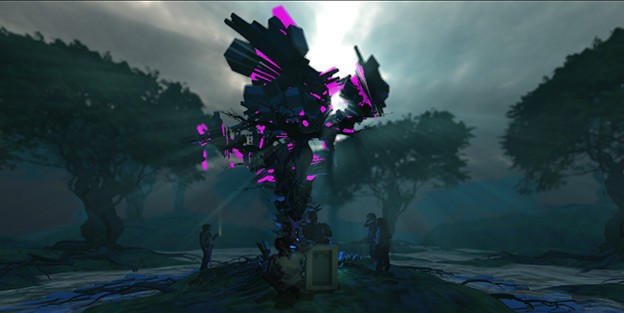
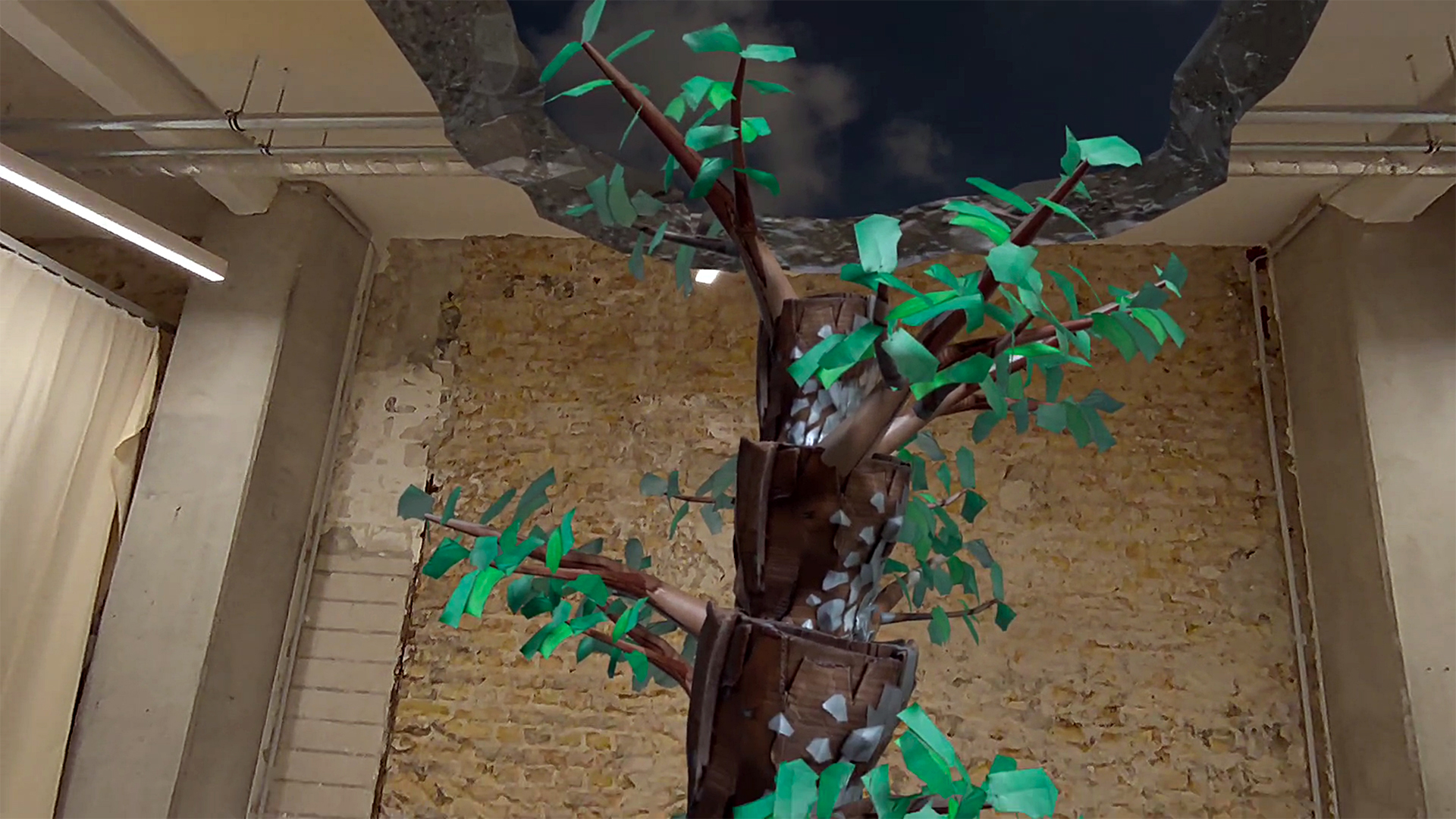
Novocene unfolds an interactive narrative that takes us on an immersive journey through the history of mankind in the Anthropocene. At first, we’re thrown back into the untouched wilderness of the holocene and travel on in rapid leaps of time through the era of the great acceleration to witness how periods of unregulated and unlimited growth are leading into resource depletion and culminating in a global climate crisis.
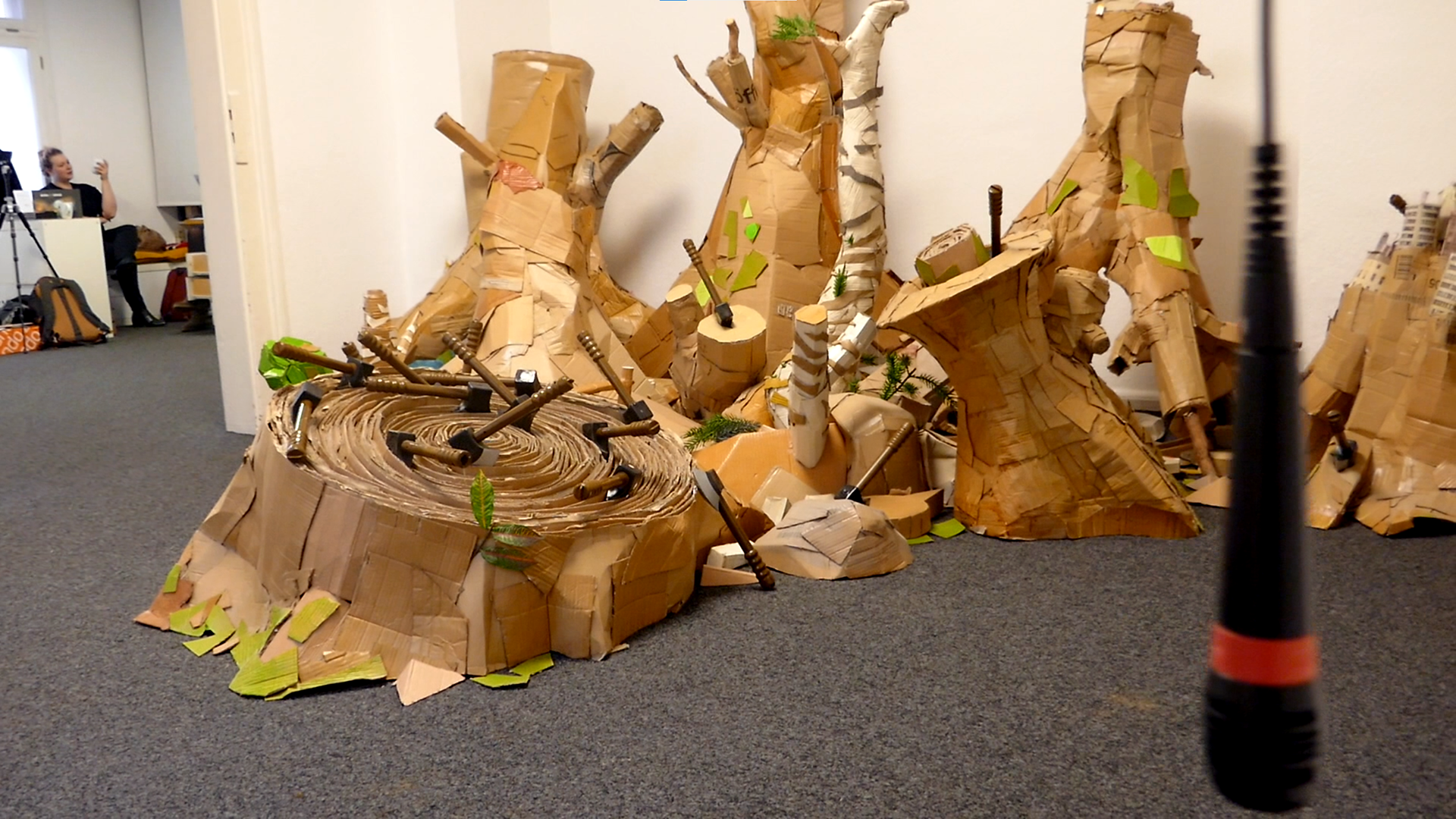
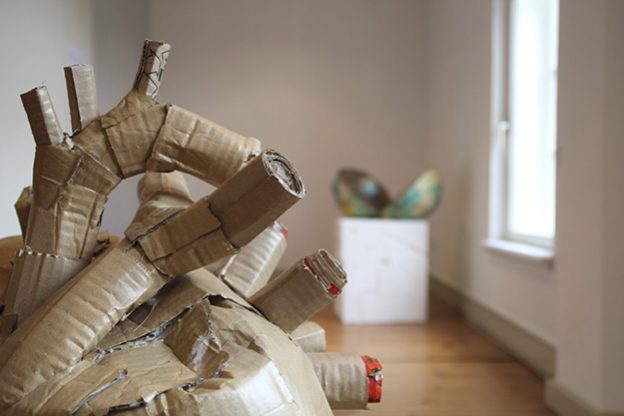
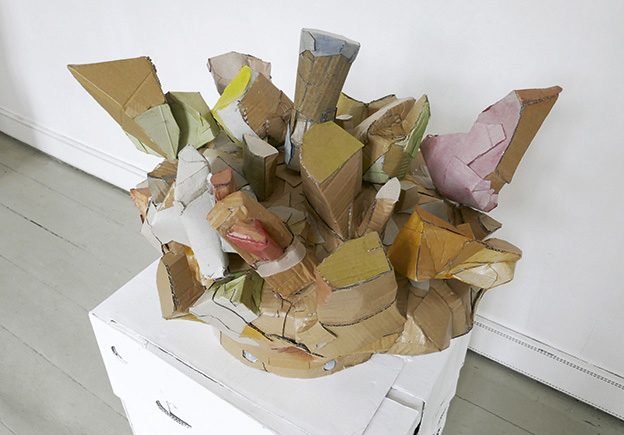
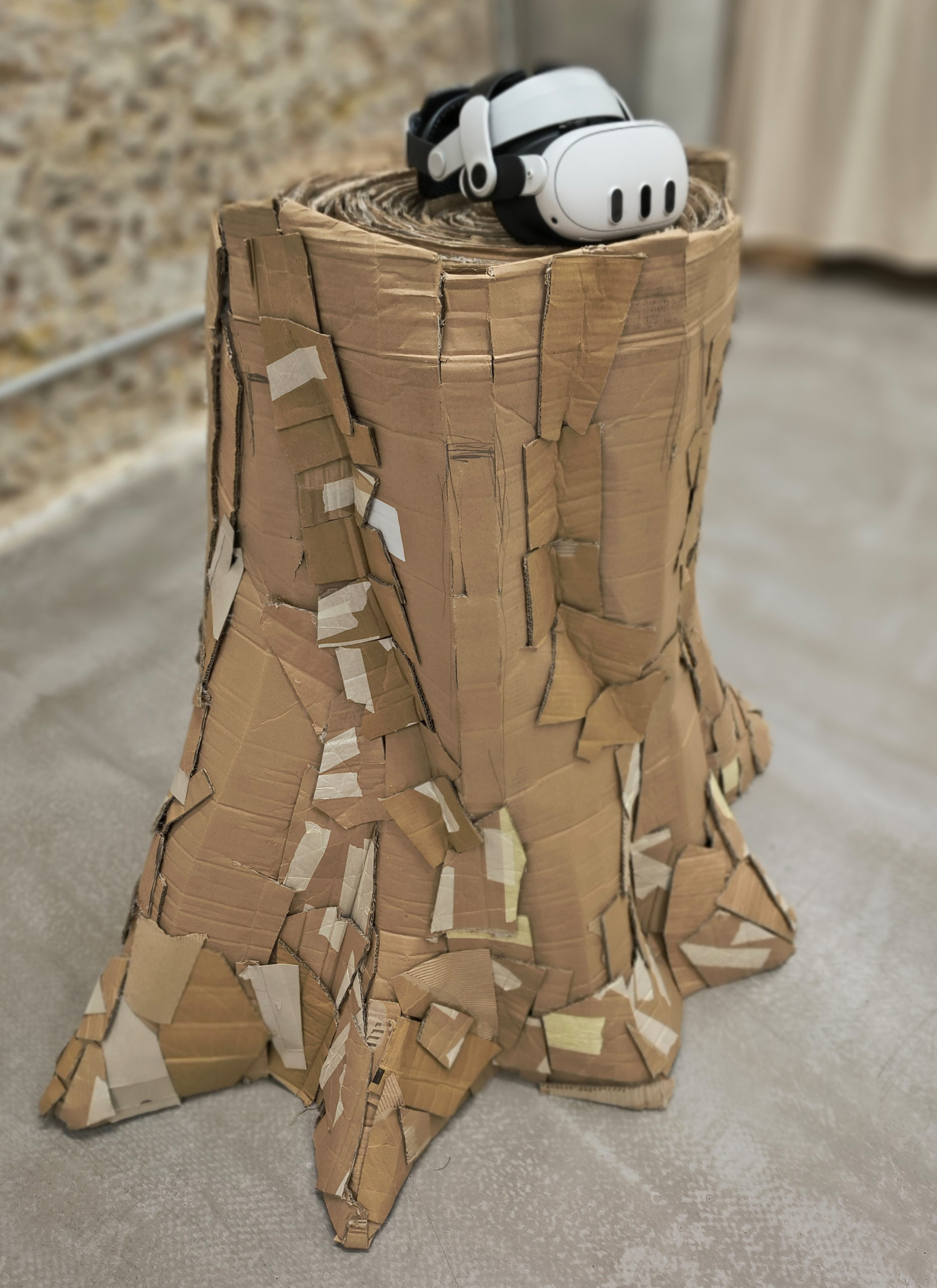
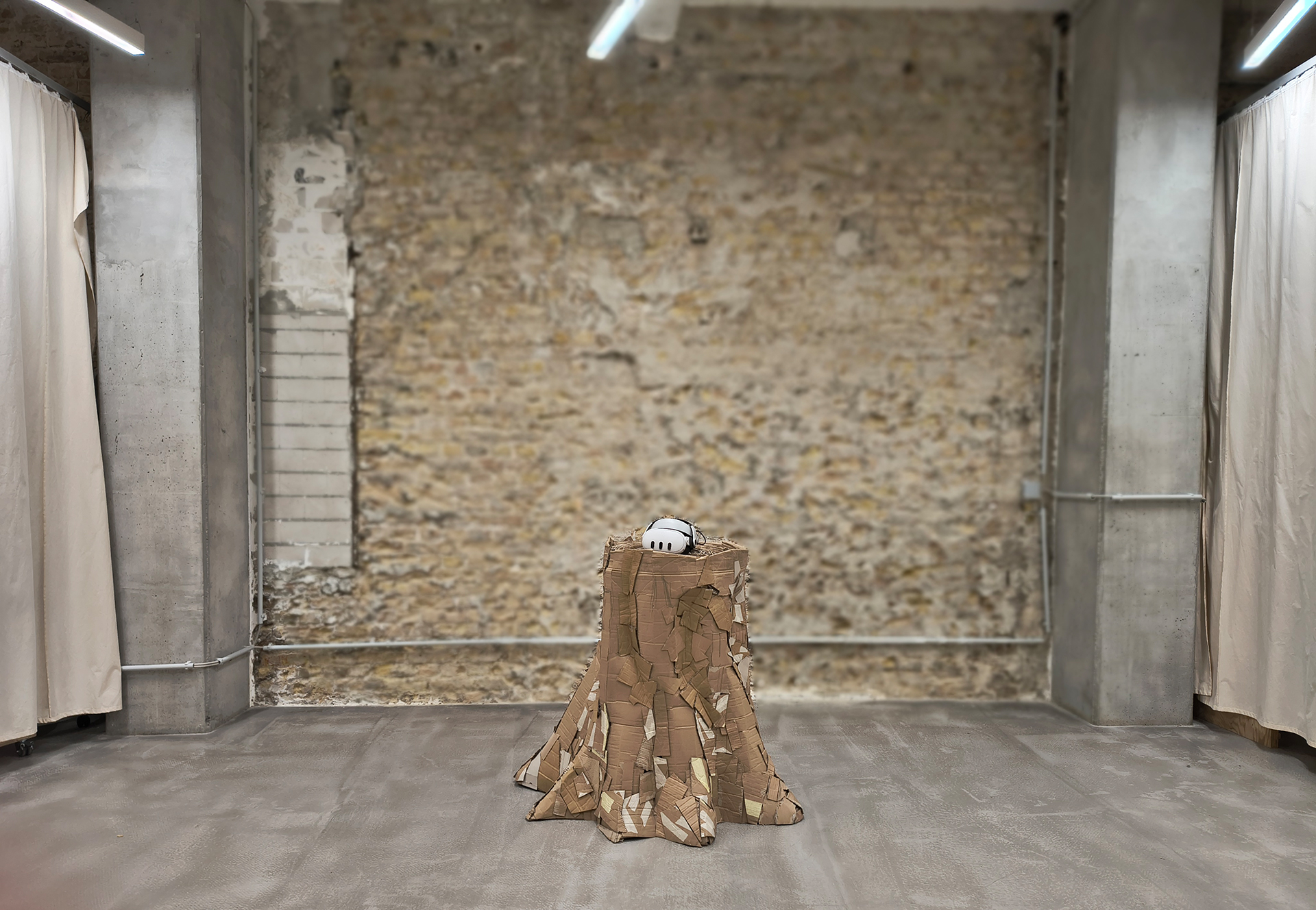
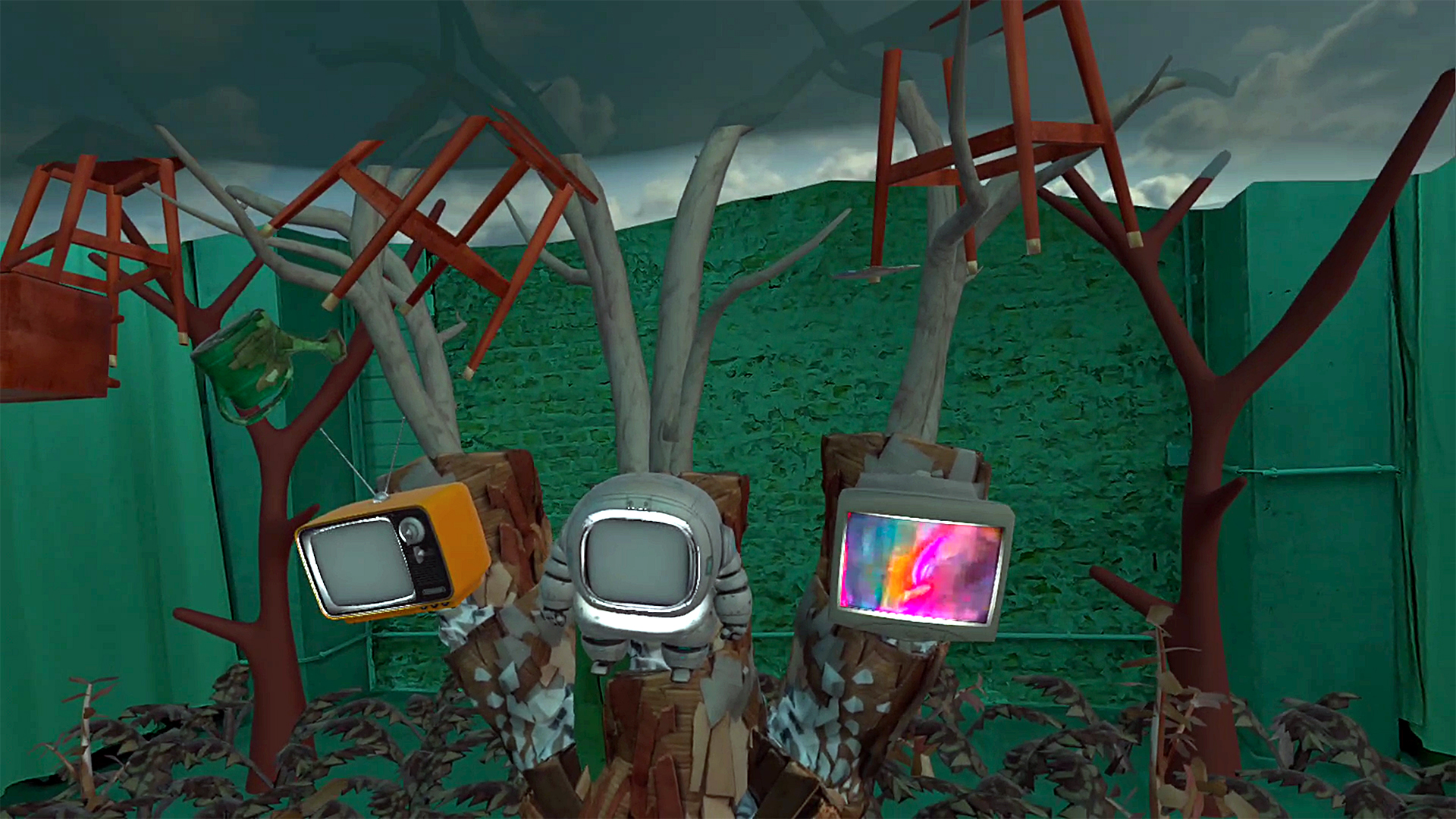
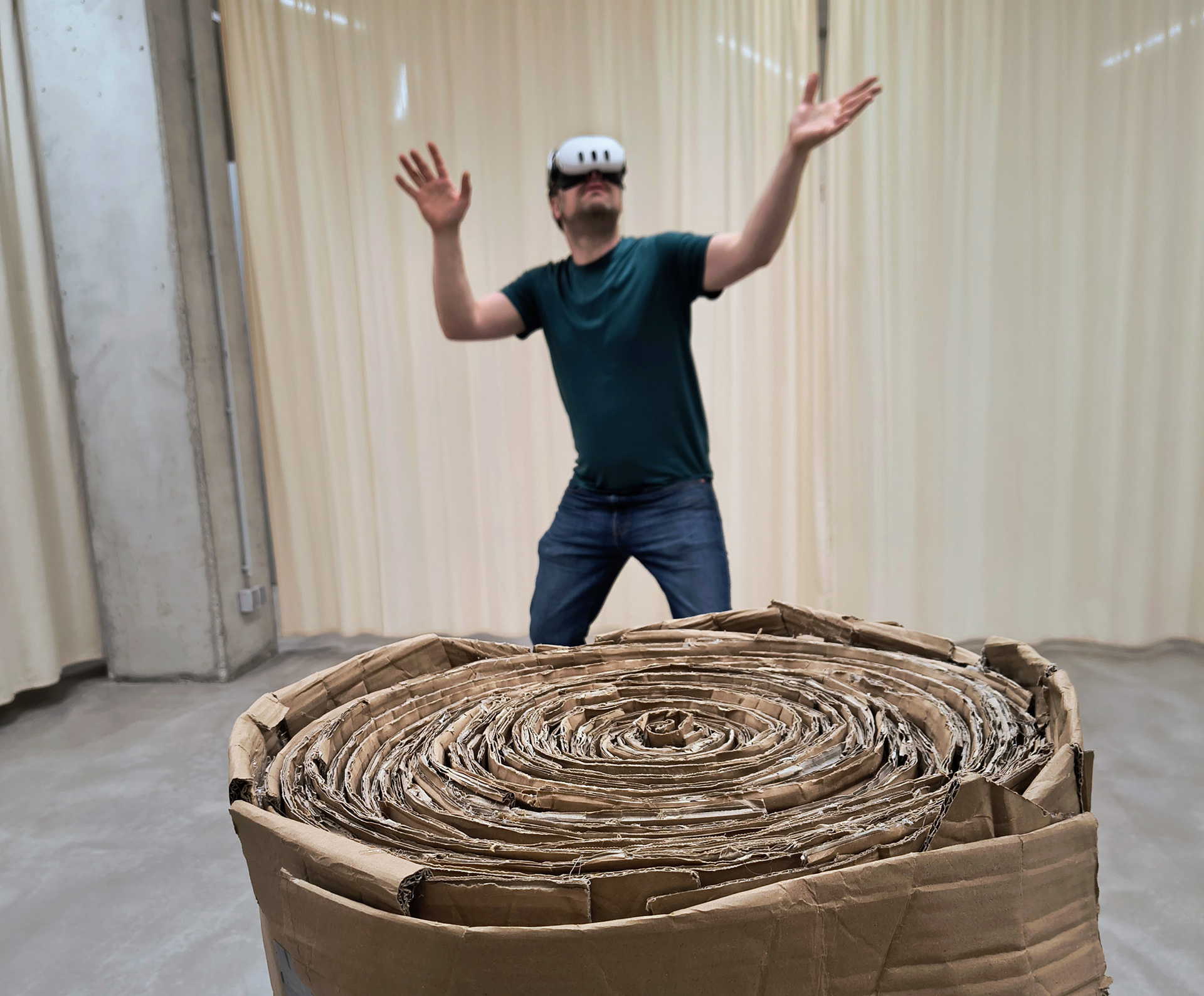
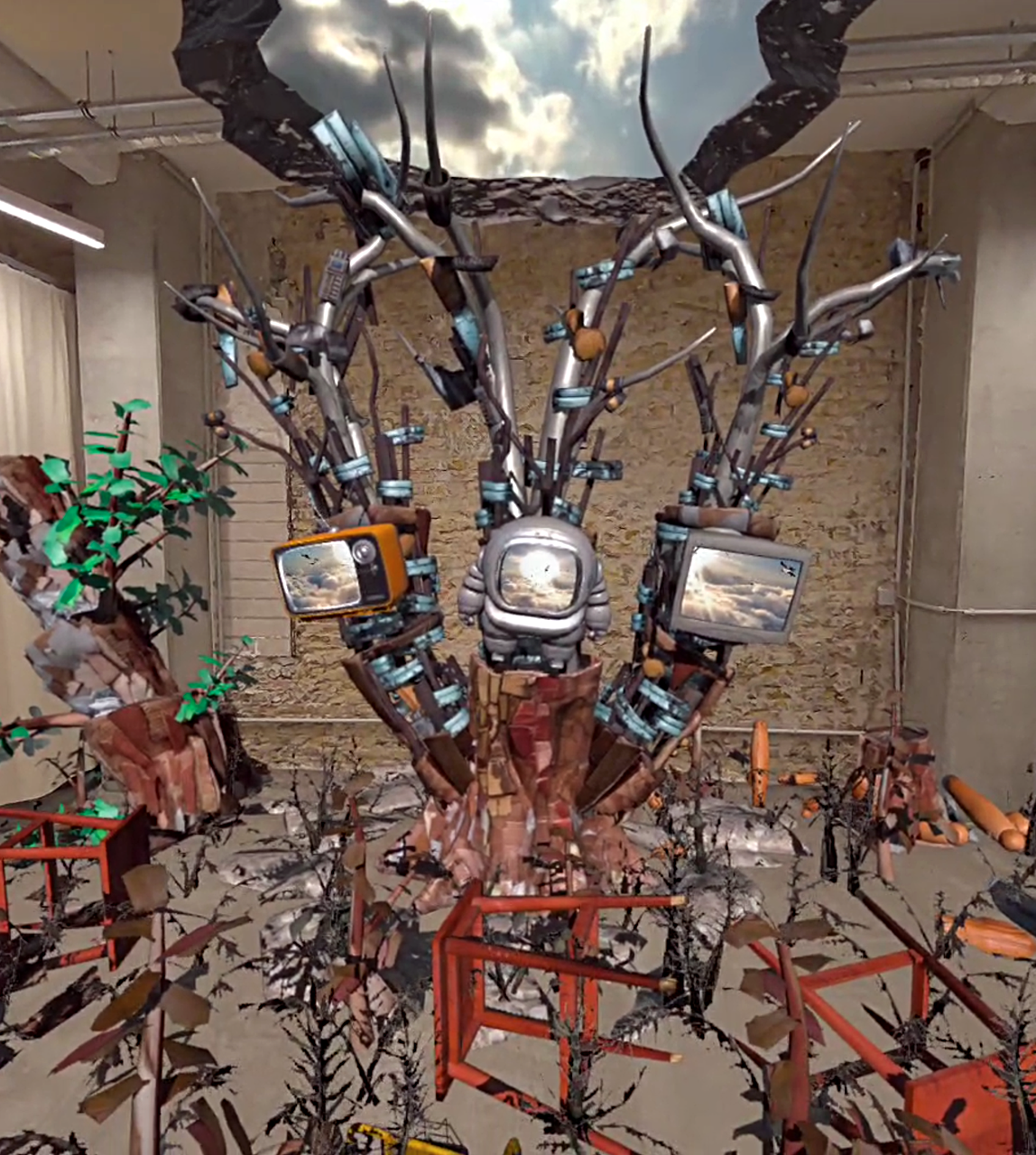
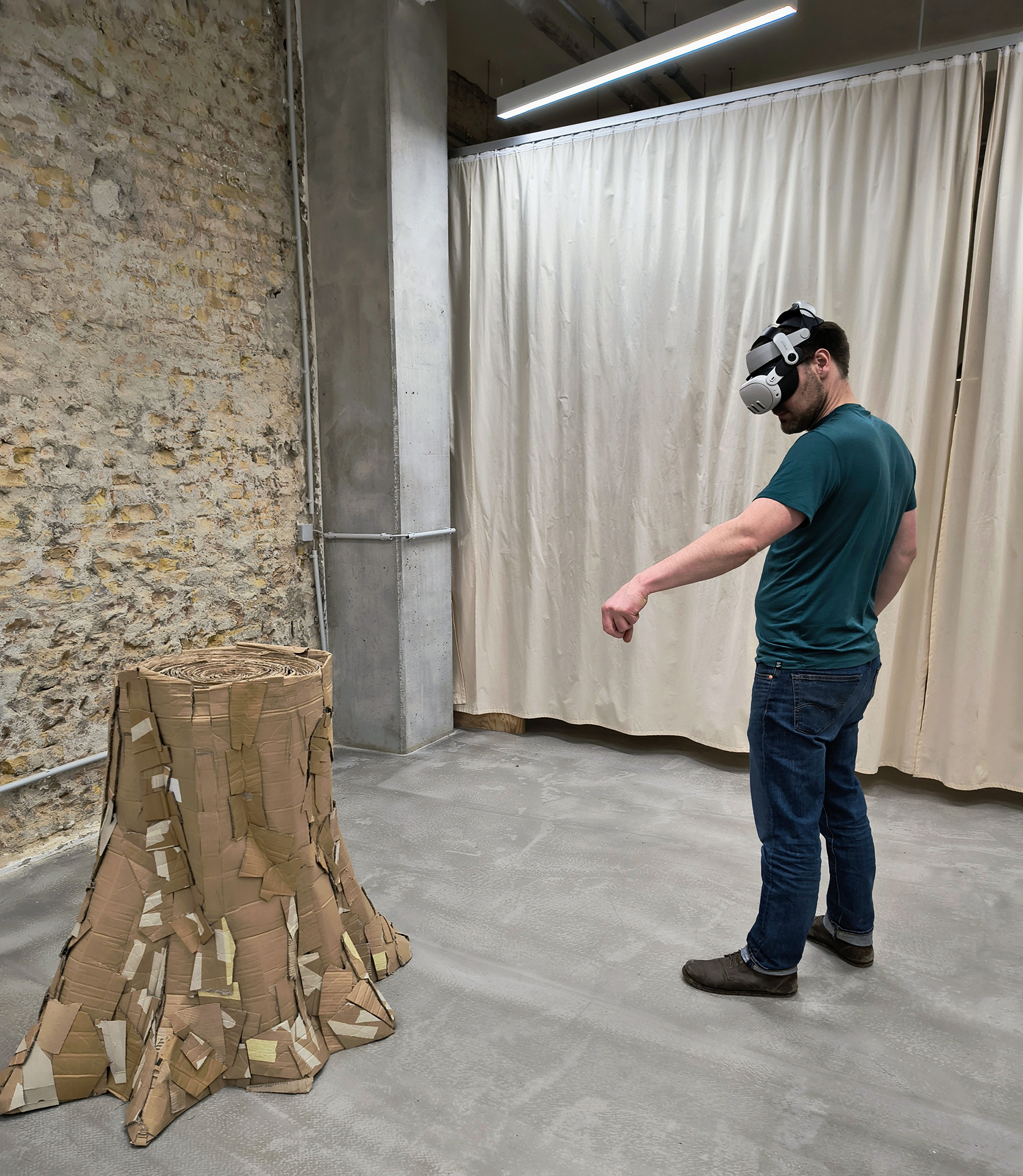
The plot evolves around the analogue sculpture of a tree stump that is virtually regrowing to a new life as soon as the viewer puts on the mixed reality headset lying on the stump. After a wild ride through various perspectives and states of denial, agency and hope, the physical exhibition space is submerged beneath a rising, 3D-rendered sea level, making the consequences of environmental transformation viscerally present. Novocene reflects on the role and development of technology, media and AI in this process of cultural evolution and attempts to envision alternative futures emerging from the contemporary polycrisis of humanity.
Decoding the limits of technology and imagination
This condensed odyssey through a human-shaped epoch also interrogates the promises and perils of technological progress and artificial intelligence in addressing the planet’s most pressing crisis. Novocene poses a critical and poetic question: Can human culture, philosophy and art at all grasp, let alone respond to, a phenomenon of such a vast and existential dimension?
Critical voices in neuroscience tend to question if humanity, in its subjective constitution, is capable of processing a problem that stretches over generations in terms of complexity and temporal dimension at all. A prominent thesis is based on the imprint of the evolutionary pressure to adapt. According to this theory, egoism steeled by competition thwarts global action or any objective imagination or collective understanding of what needs to be done.
Novocene addresses humanity’s impact on nature and the curious paradox of our collective inertia. It seeks a narrative that navigates the delicate balance between moralism and fatalism on one side, and naïve optimism and techno-solutionism on the other.
Documentation and Materials
The Slot Machine of Tech Utopanism
The installation Novocene pays homage to philosopher James Lovelock, who envisioned humanity’s existential dilemma being resolved in a future age of hyperintelligence — an idea he outlined in his 2019 popular science book Novacene. Optimistic visions of hyperintelligence have become particularly fashionable amid the current hype surrounding so-called artificial intelligence. While enthusiasts see it as a new dawn of progress, critics regard AI as the latest heir to a long line of technological salvation myths, following in the footsteps of blockchain and NFTs. Paradoxically, AI also contributes to genuine environmental problems — chiefly through its exorbitant energy demands and the resulting surge in emissions. This tension resonates with the production of Novocene, during which Jens Isensee increasingly turned to various AI tools for generating textures, objects, voices, characters, and even three-dimensional forms.
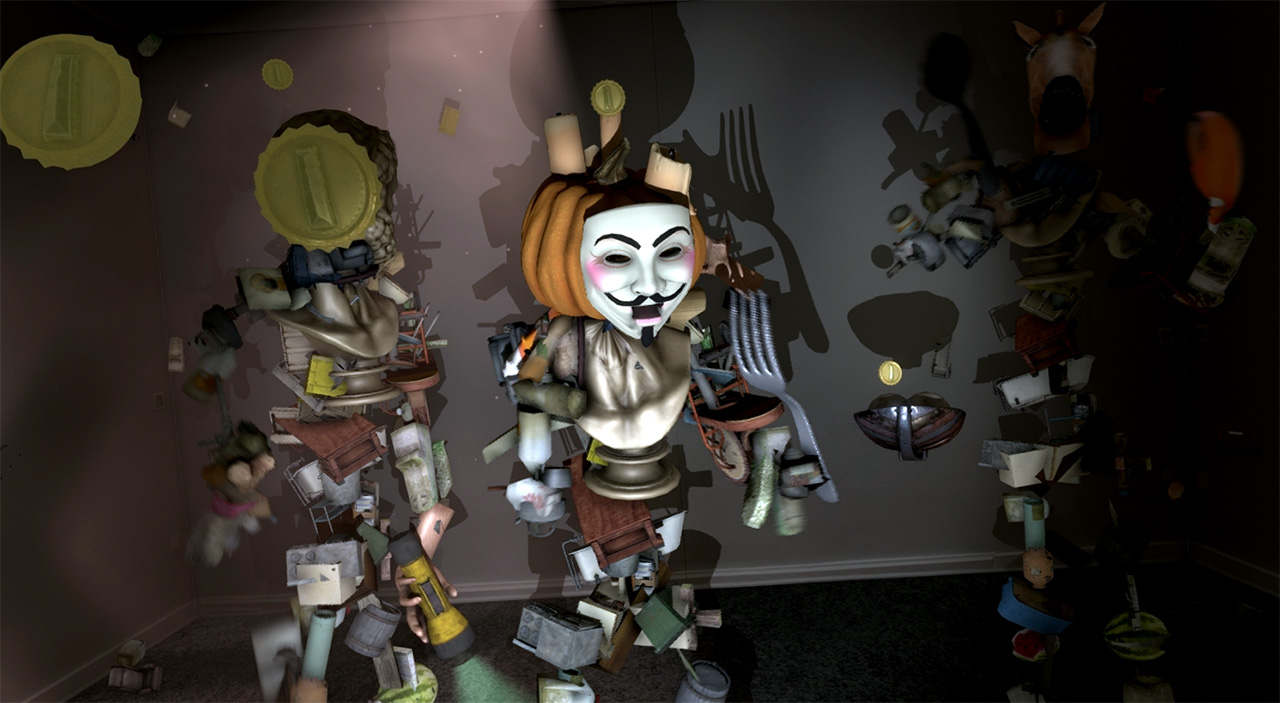
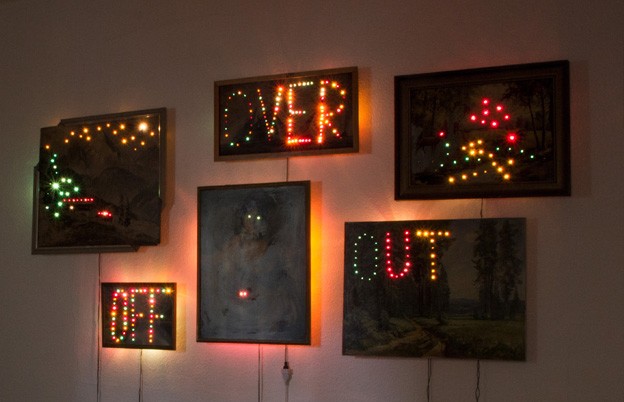
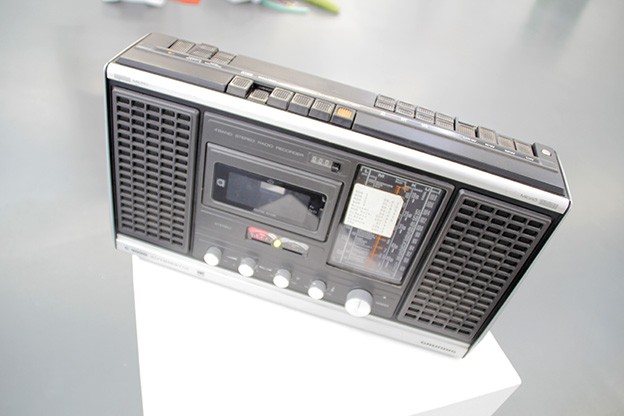
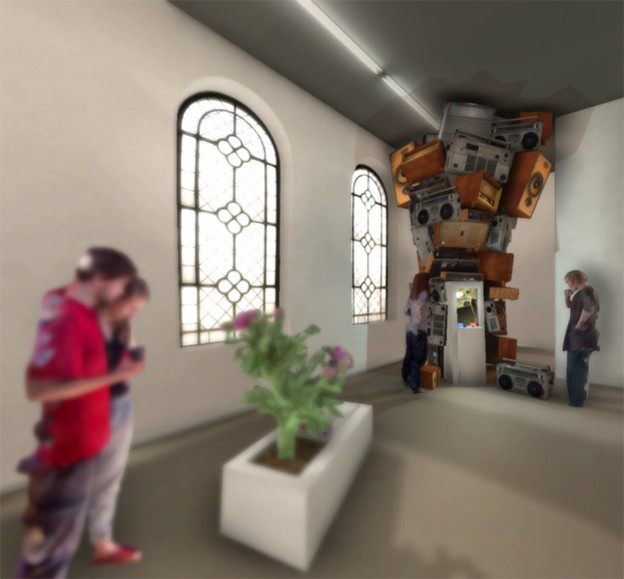
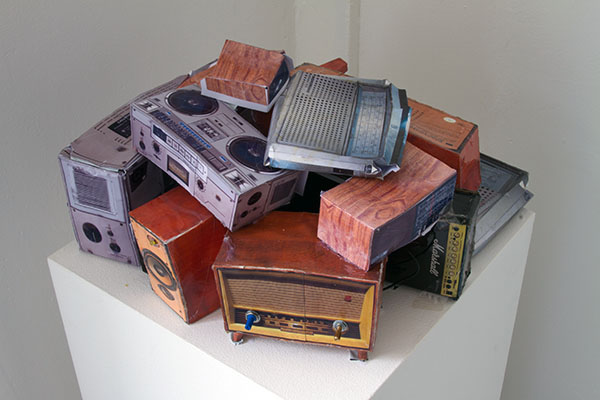
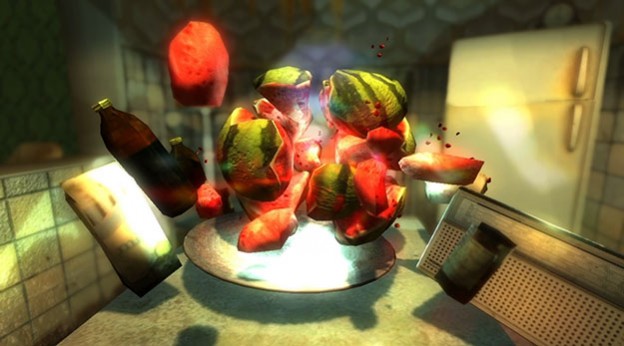
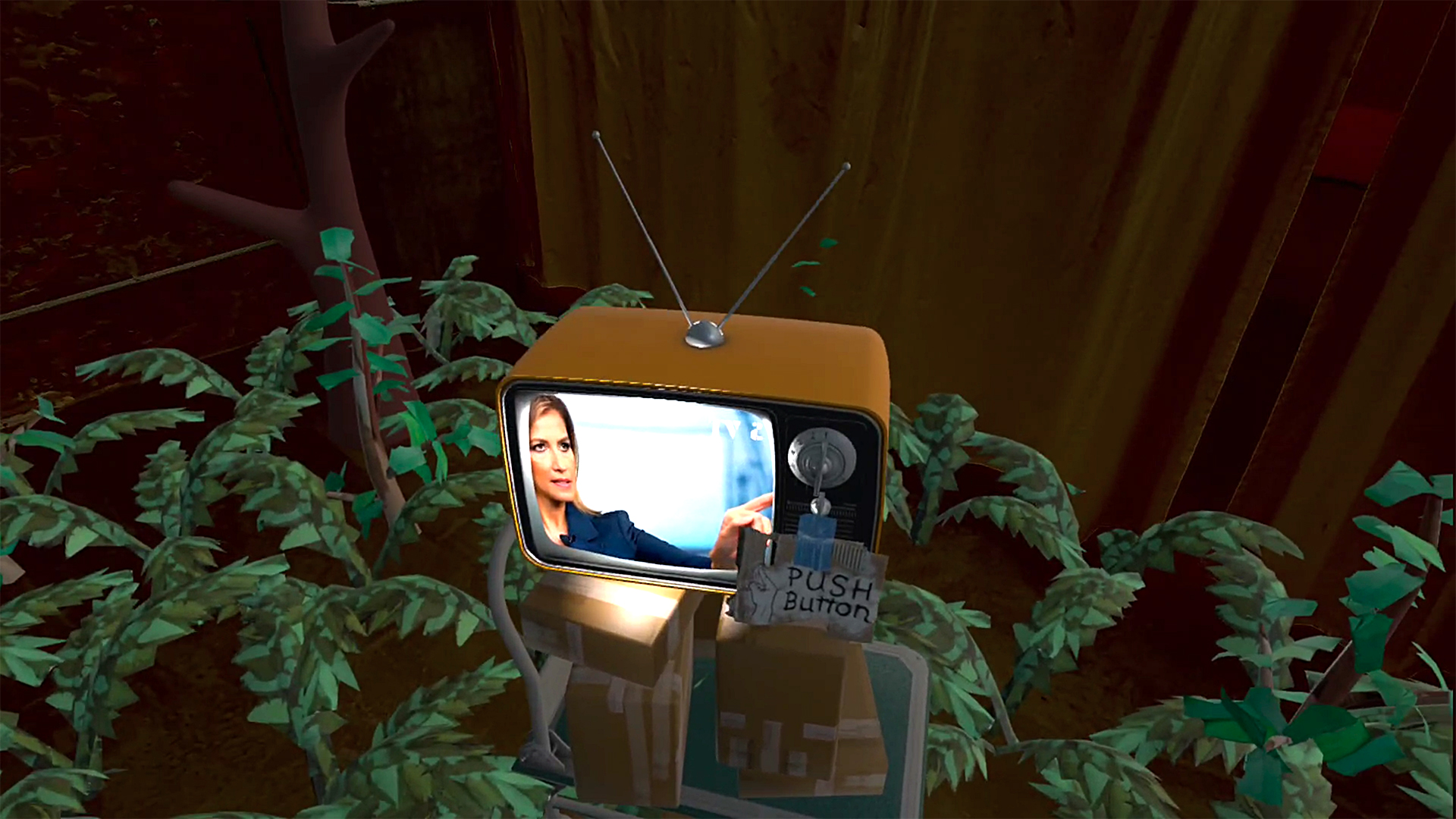
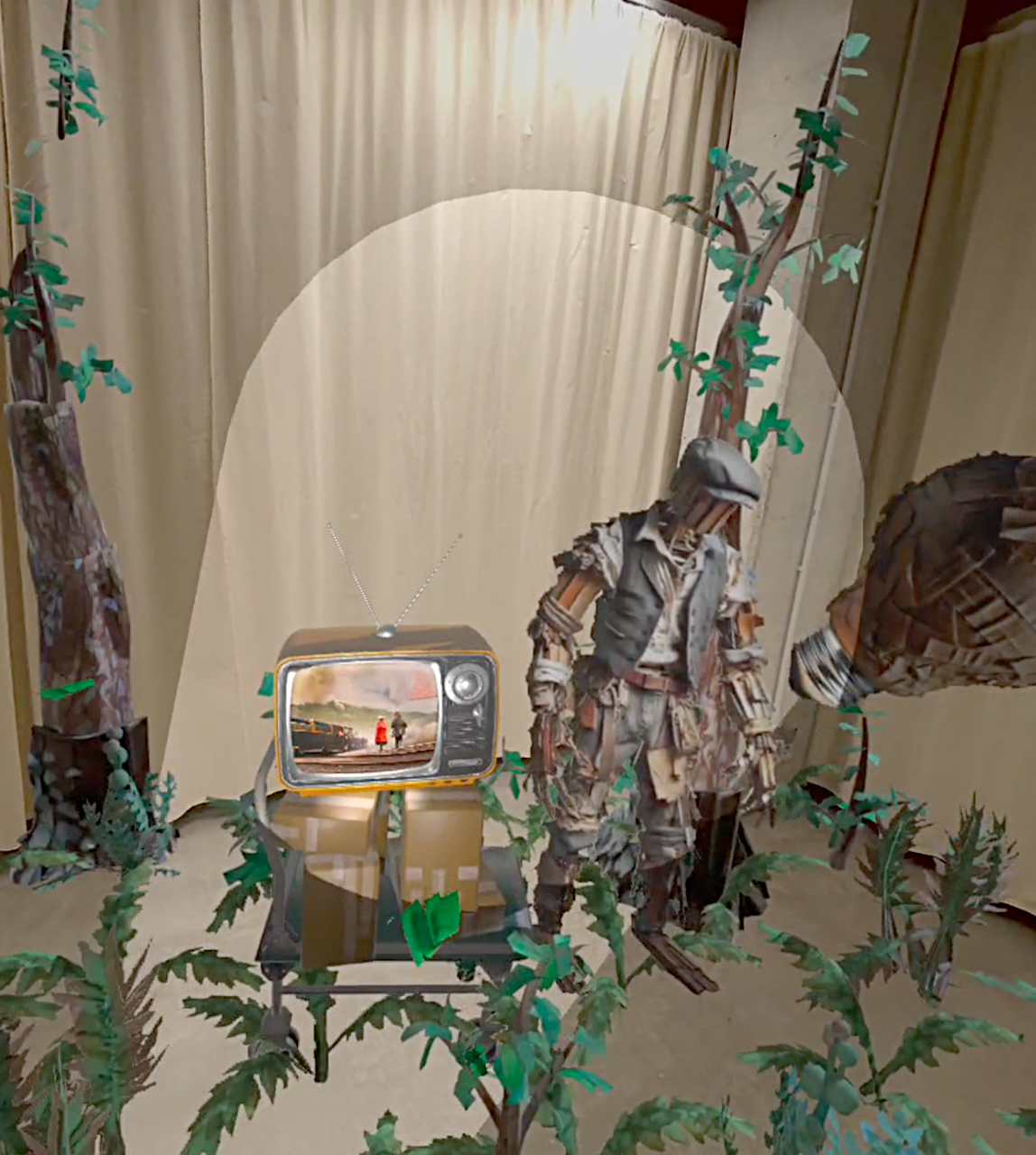
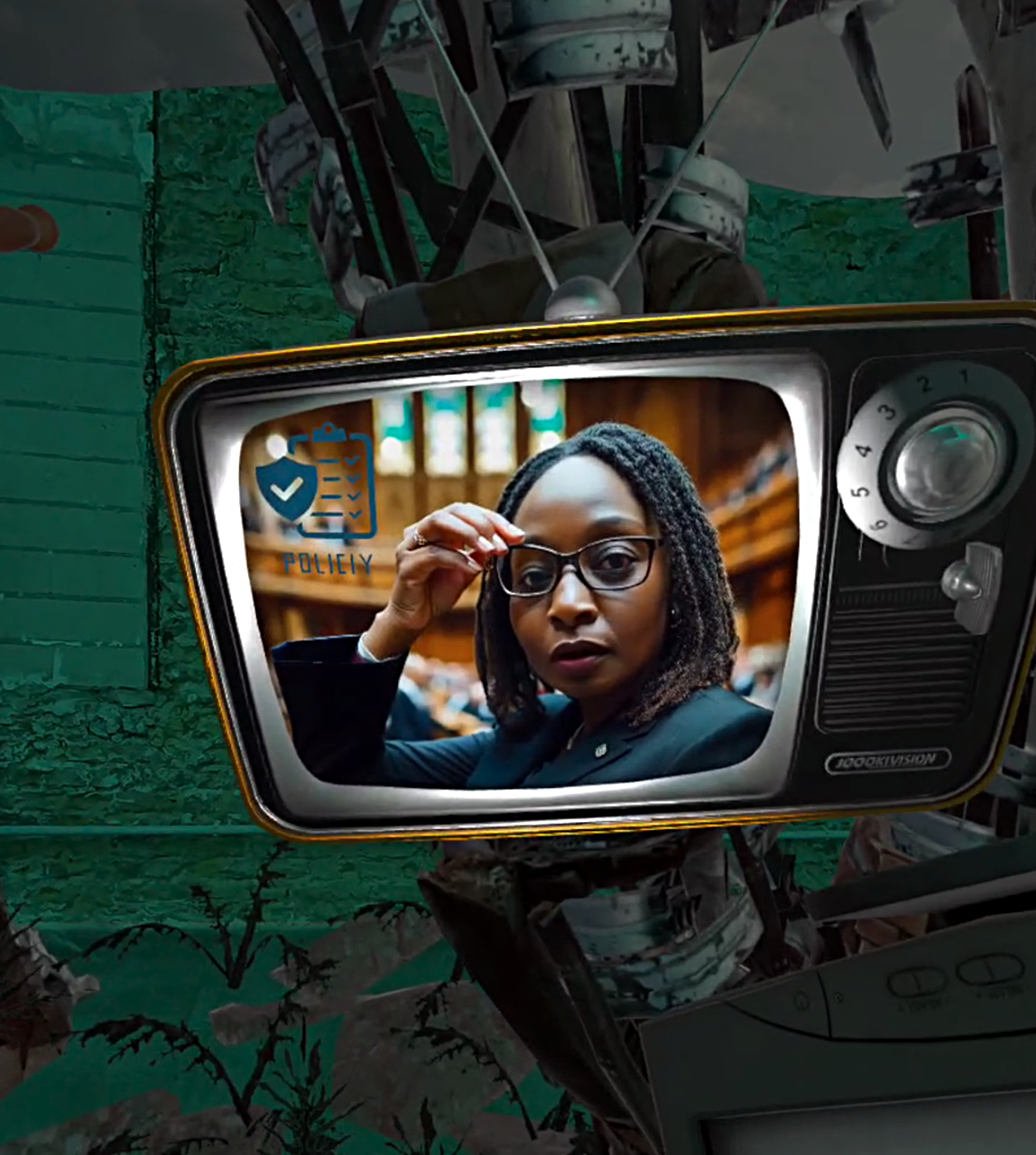
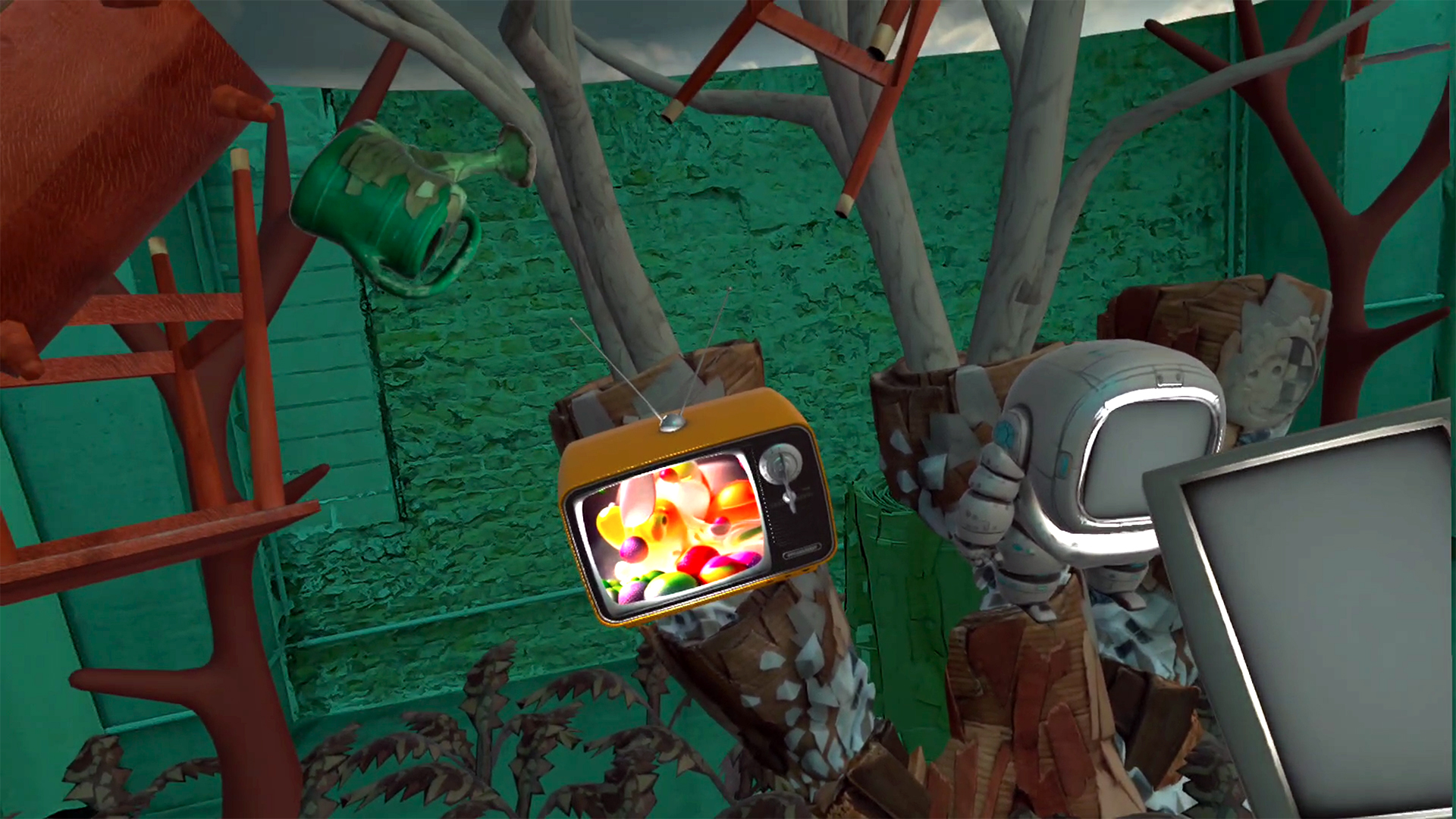
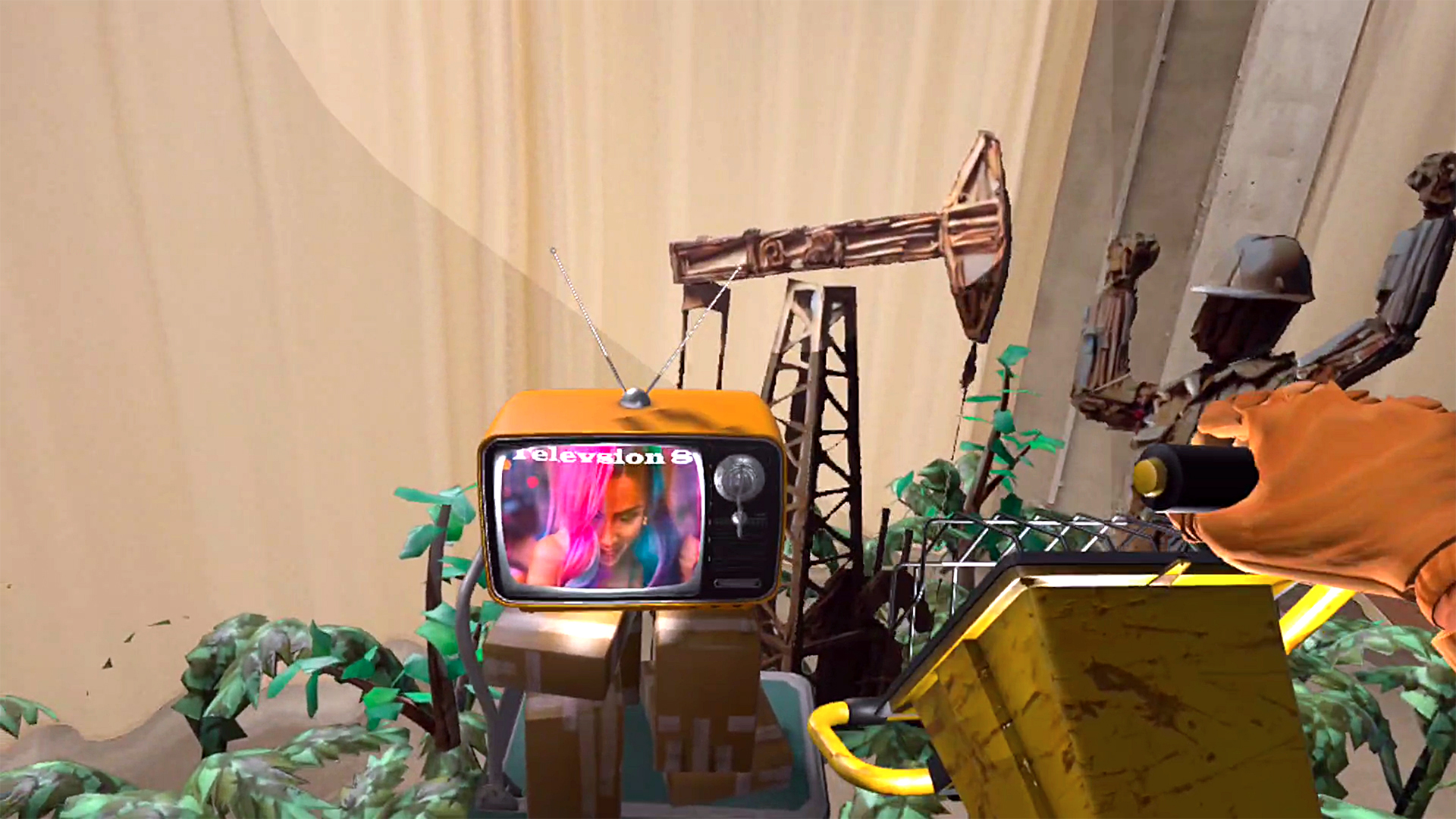
Whether this process gives rise to a distinctive visual identity or merely to a quickly dated, generic aesthetic remains an open question — one that mirrors a broader cultural AI dilemma and finds direct expression within Novocene itself. Devices such as radios, televisions, monitors, and a chatbot populate the virtual space like avatars of media evolution, propelling the narrative through fragmented announcements and broadcasts. In the end, these media devices are fused into a kind of slot machine — a hybrid apparatus that perpetually spits out tech solutions undermining their own logic, patterns, and clichés.
Last but not least Novocene also explores the immersive and activating potential of mixed reality hardware and interactive 3D game engines, which is often talked about as a new way of awakening empathy and agency for the state of the earth. As a philosophical reflection, the work aims to stimulate the idea of a global sense of responsibility and to emphasize the urgency of action.
Aesthetics of Machine-Made Reality
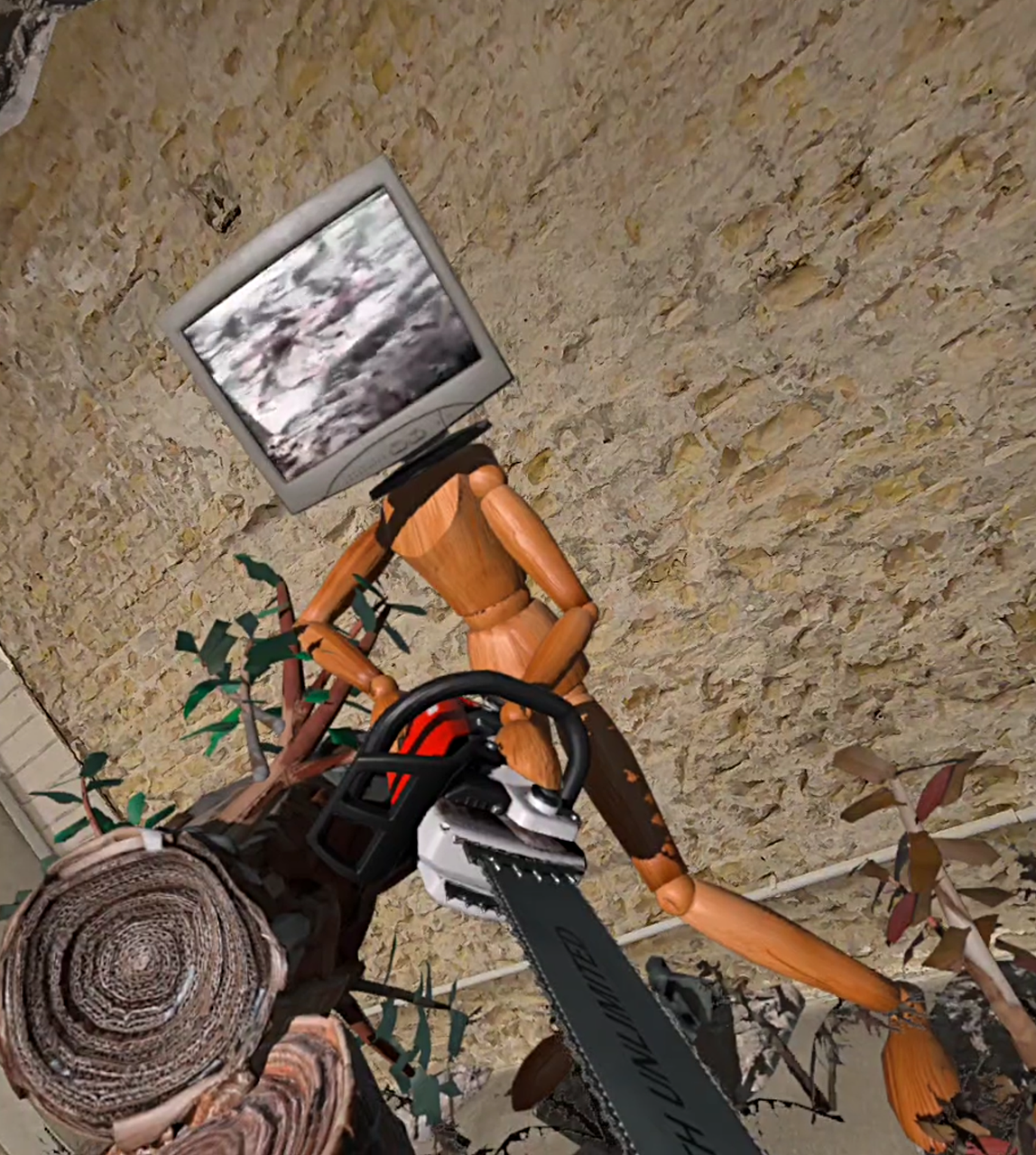
To create the visual environment, various AI solutions were used to generate image, video and sound material, as well as to create 3D models. They became increasingly important as the project progressed and the scope of the project grew. The significance of these new technical options for artistic work also reflected into the thematic dimension of the work, shaping the narrative and its final statement. The screens of the technical devices ultimately proclaim to the viewer a solution to environmental and climate problems, while paradoxically he is surrounded by nature that has been completely deforested and devastated and the felled tree has been replaced by a technical construction. The critical countering of technical development thus became the central motif of the immersive installation.
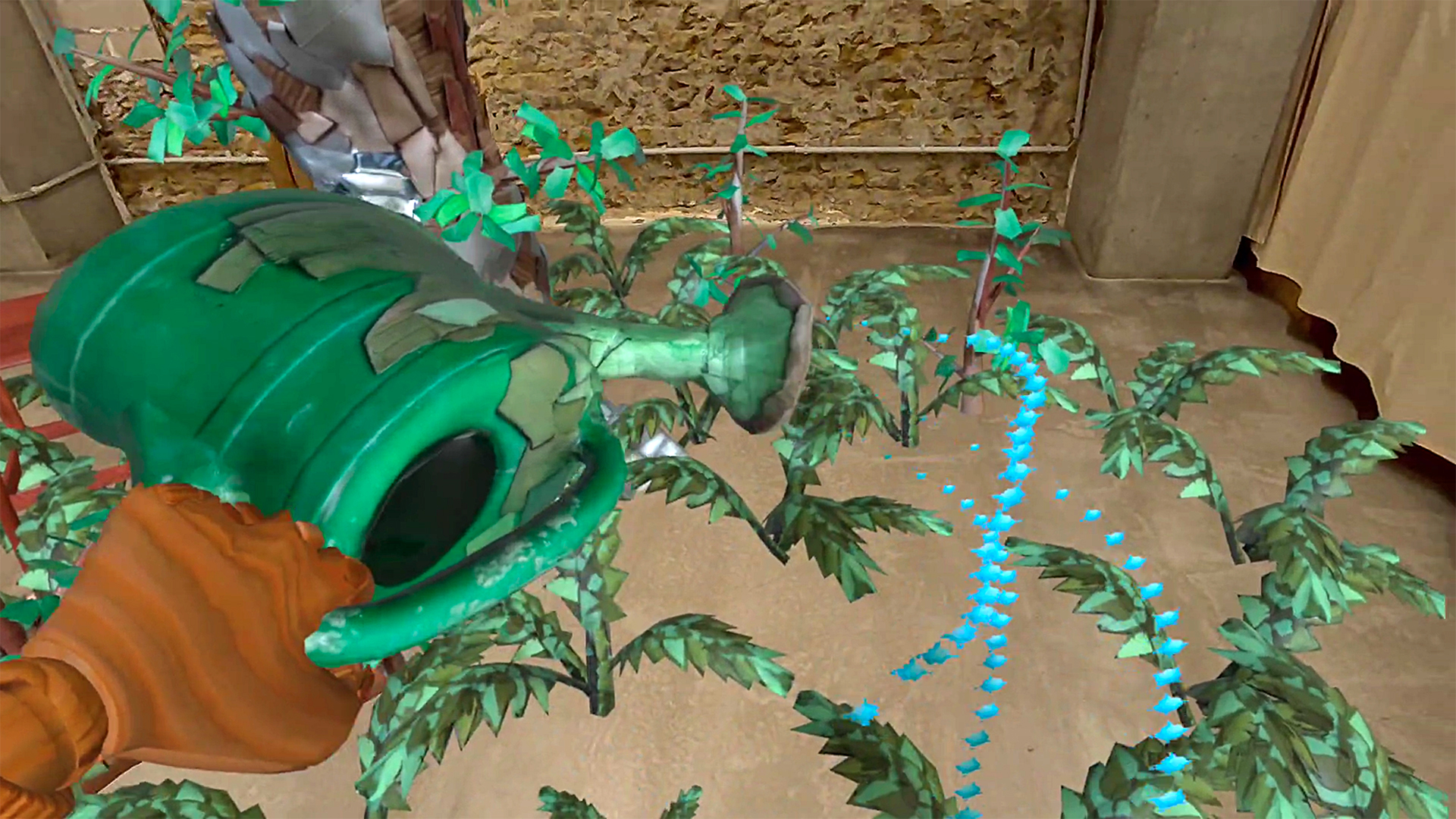
Some of the interaction objects, such as the tree stump and the watering can, were modeled and constructed in analog form and then photographed from all sides using the AI-supported smartphone app Kiri-Engine and automatically converted into 3D models that require hardly any post-processing. To create the chat bot model, the AI solution Hunyuan3D-2 from Tencent was used, which creates a complete 3D model from one or more images. The required image templates were first created using the image generators of Adobe’s Photoshop, Midjourney and ChatGPT’s Dall-E 3. Here, the artist first carried out an experimental style development and compared the different methods to generate figure designs, but also plants and textures. This visual material was also used in the videos, which can be seen on a number of screens and televisions in the plot and essentially drive the narrative forward. Faces and people were animated and lip-synched In Runway and various image-based videos were generated with it. In the case of the narrative characters, their texts were first converted into speech output using Elevenlabs.io.
Links and Literature
Jens Isensee creates his art not least in order to structure his thinking and develop new ideas in the process of their realization. He sees accompanying texts as part of the body of work. Already the title Novocene is an homage to the environmental philosopher James Lovelock, who as a scientist was also involved in the discovery of the hole in the ozone layer. He saw the aforementioned human dilemma being solved in a future age of hyperintelligence, which he outlined in his popular science book Novacene (2019). Many trains of thought and narrative threads in this work are interpretations and collages of excerpts and fragments from books read in context. For the realization of Novocene, he credits the anthology Interspecies Future (2014) by the LAS Art Foundation and its authors as a great inspiration. Men who burn the world, Männer, die die Welt verbrennen (2024), by Christian Stöcker sharpened the final certainty that we are sacrificing the future of our living world to the profits of a vanishingly small minority. From Thomas Metzinger’s Culture of Consciousness, Bewusstseinskultur (2023), he took the astute analysis of the world situation and that it is now nothing more than an act of intellectual dishonesty not to name the actual catastrophe as such. There was also a lot on how we could develop a new consciousness in New Radical Enlightenment: Philosophy for a Common World (2024) by Marina Garcés.
Novocene is a Collaboration with
Aurora XR School for Artists | Hera Project | HTW Berlin

Novocene was selected by the XR Open Call jury of HTW Berlin’s AURORA XR School for Artists in April 2024. As a result, it is now being developed in close collaboration with HTW’s interdisciplinary project team, with co-funding from the European Regional Development Fund under the INP-III program and the kind support of the Senate Department for Culture and Community.
Novocene – Eine mögliche Zukunft
Interaktive Mixed Reality Installation
Quest 3 MR-Headset und analoge Baumskulptur | 5 x 5 m
Mögliche Zukünfte des Anthropozäns
Novocene entfaltet eine interaktive Erzählung, die uns auf eine immersive Reise durch die Geschichte der Menschheit im Anthropozän mitnimmt. Zu Beginn werden wir in die unberührte Wildnis des Holozäns zurückversetzt und durchlaufen in raschen Zeitsprüngen die Ära der sogenannten „Großen Beschleunigung“, um mitzuerleben, wie Phasen unregulierten und grenzenlosen Wachstums in Ressourcenerschöpfung münden und schließlich in einer globalen Klimakrise kulminieren.
Im Zentrum der Handlung steht die analoge Skulptur eines Baumstumpfs, der virtuell zu neuem Leben erwächst, sobald die Betrachterin oder der Betrachter das auf dem Stumpf liegende Mixed-Reality-Headset aufsetzt. Nach einer rasanten Fahrt durch unterschiedliche Perspektiven und Zustände von Verdrängung, Handlungsfähigkeit und Hoffnung versinkt der physische Ausstellungsraum unter einem ansteigenden, 3D-gerenderten Meeresspiegel – die Folgen ökologischer Transformation werden körperlich erfahrbar.
Novocene reflektiert die Rolle und Entwicklung von Technologie, Medien und künstlicher Intelligenz in diesem Prozess kultureller Evolution und versucht, alternative Zukünfte zu entwerfen, die aus der gegenwärtigen Polykrise der Menschheit hervorgehen könnten.